Development history of solar street lights
2025-11-27
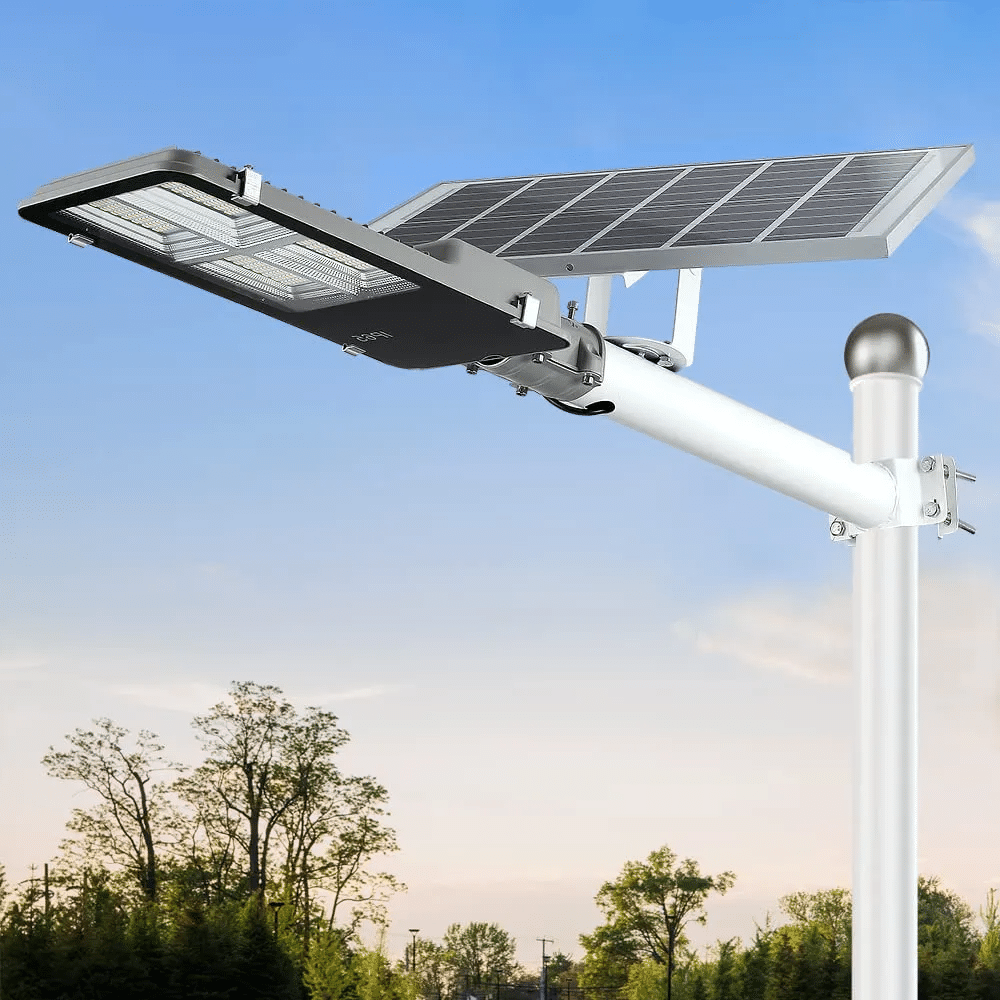
The development history of solar street lights is as follows: Early exploration: In 1839, French physicist A.E. Clerc discovered the photovoltaic effect. In 1883, American inventor Charles Fritts created the first solar cell. In 1891, Fritts installed the first solar panel on the roof of New York City for lighting purposes. In 1900, Clarence Kemp applied for a patent for the first solar street light design, which used a parabolic reflector to concentrate sunlight onto a selenium cell to generate electricity to power the light.
- Technological accumulation: In 1954, the Bell Laboratories in the United States successfully developed practical monocrystalline silicon solar cells. The space race in the 1960s accelerated the development of solar technology, and NASA used small solar cells to power satellites. In 1973, countries around the world began research on the ground application of solar cells. In 1974, the Barabago Park solar demonstration project conducted the earliest experiment on solar public lighting. In 1980, the University of Delaware's solar park installed the first large-scale solar street lighting system.
- Gradual promotion: In the 1980s and 1990s, photovoltaic panel technology continued to advance, conversion efficiency significantly improved, battery life extended, and costs decreased. At the same time, LED technology emerged and gradually replaced traditional light sources, enhancing the performance of solar street lights. After the 1990s, governments around the world launched initiatives to promote clean energy, and the application of solar street lights rapidly increased. The 1996 Atlanta Olympics used solar lighting on a large scale.
- Rapid development: In the early 21st century, with the global emphasis on climate change, solar street lights ushered in a period of rapid development due to their energy-saving and environmental advantages. Governments around the world strongly supported their use, and they were widely applied in rural and urban roads. In recent years, the application of the Internet of Things and big data technology has made solar street lights intelligent, enabling remote monitoring, automatic dimming, fault alarms, etc., further improving efficiency and reliability.
Unlock a new experience of outdoor lighting! Zhongshan Longguan Lighting, a popular solar energy product with a front store and back factory model, helps you upgrade your profitability
Global Green Lighting Trend: Smart Street Lights – Domestic Engineering Expertise Meets Overseas Needs